What is the Supply Chain Act?
The German "Supply Chain Act" explained in a simple and comprehensive way.

The German "Supply Chain Act" explained in a simple and comprehensive way.
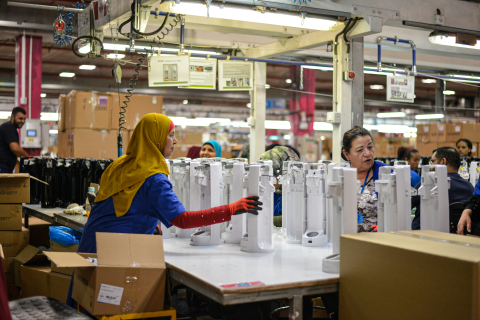
Many companies produce their products and services with the help of complex and often international supply chains. In addition to the numerous advantages of the division of labour and globalization, this also results in an important responsibility for companies: They must ensure that their products and services are free from human rights and environmental protection violations.
In addition to a moral and corporate obligation, the protection of the environment and human rights has now been specifically enshrined in the Supply Chain Act. The law came into force on January 1, 2023.
The Supply Chain Due Diligence Act (Lieferkettensorgfaltspflichtengesetz, LkSG) obliges every major company in Germany to take responsibility for the protection of human rights and the environment along their (global) supply chains.
To this end, the Supply Chain Act defines due diligence obligations for all steps in Germany and abroad that are necessary for the manufacture of products and the provision of services - from the extraction of raw materials to the delivery to a final customer.
The legal term "supply chain" refers to:
The law applies to companies in Germany that regularly employ more than 3,000 people. From January 1, 2024, it will also apply to companies with 1,000 or more employees.
Indirectly, however, smaller companies that do not fall directly under the scope of the LkSG should also comply with their due diligence obligations. The National Action Plan for Business and Human Rights (NAP) has been in force since 2016 and formulates corresponding expectations for all companies based in Germany. The LkSG is essentially based on the due diligence requirements of the NAP.
Human rights and environmental protection were of course important pillars of corporate activity even before the Supply Chain Act, but now they require not only ethical but legally compliant behavior.
Specific examples for violations of the law include:
Please note that environmental pollution, e.g. water poisoning, is not only considered environmental damage but is also a violation of human rights.
Companies have a responsibility to identify and assess these risks in their supply chains and act accordingly. And this is also in their interest, because in addition to hefty fines for violations of human rights or the environment, companies must also expect an irreparable loss of trust from their stakeholders.
Get a free demo account now and let's talk about your needs in a web meeting. We will show you how to successfully strengthen compliance in your company through employee training.
The Supply Chain Act defines the following due diligence obligations:
Risk analysis: It is the responsibility of companies to carry out detailed risk analyses along their supply chains. This allows potential violations of human rights, environmental damage and other adverse effects to be identified.
Preventive measures: Following the risk analysis, appropriate preventive measures must be taken to prevent the identified risks. Examples of preventive measures include standards of conduct for suppliers, compliance training for employees and regular audits.
Complaint mechanisms: These mechanisms must enable your company, suppliers and other affected parties to report violations of human rights or environmental standards. It goes without saying that such reports must be treated confidentially and investigated appropriately.
Effective remedial action: In the event of violations, it must be possible to quickly initiate appropriate remedial measures to repair damage and prevent future violations. These measures may include compensation for those affected or even termination of the cooperation if necessary.
Disclosure: The measures taken, the handling of risks and the results of risk analyses must be made transparent at regular intervals.
To ensure that your specialist departments are well sensitized and empowered, regular compliance training courses are a good idea, including for the Supply Chain Act. Ideally, an e-learning should be supplemented with intranet content, contacts from your compliance team and links to the most important resources.
Our in-house experts and our security team will be happy to help you with this. Contact us for a consultation and see our free demos for yourself.
Other topics that might interest you

What is a cartel?

Export control is essential for compliance in international trade and regulates the export of goods & technologies.

The General Equal Treatment Act (AGG) at a glance: What employers need to know.

Corruption & fraud – small "favors" can quickly become crimes.

Explained in a simple and comprehensive way.

Everything important about whistleblowing in a 9-minute learning nugget.
How to repackage familiar GDPR content into exciting online courses.

Find out how companies can properly motivate their employees to complete an e-learning course on cyber security, data protection or compliance.
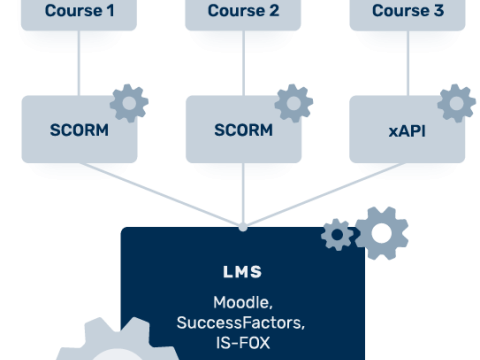
In this article, we explain the technical terms Scorm, LMS and e-learning course.

Technical settings and tips for LMS administrators